Every number on this page comes from one campaign: 9 scenarios, git bisect versus crux, same predicate commands, same machine, raw data in the repository under benchmark/results/raw.tsv. Accuracy column means the tool named the actual breaking commit.
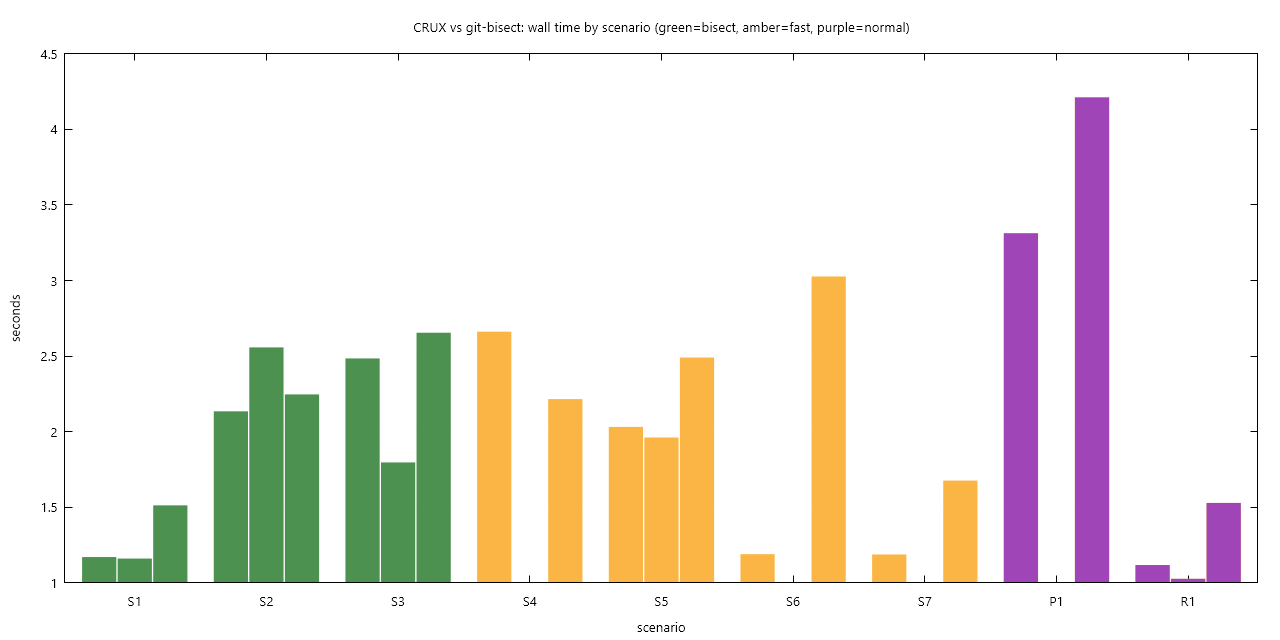
wall time
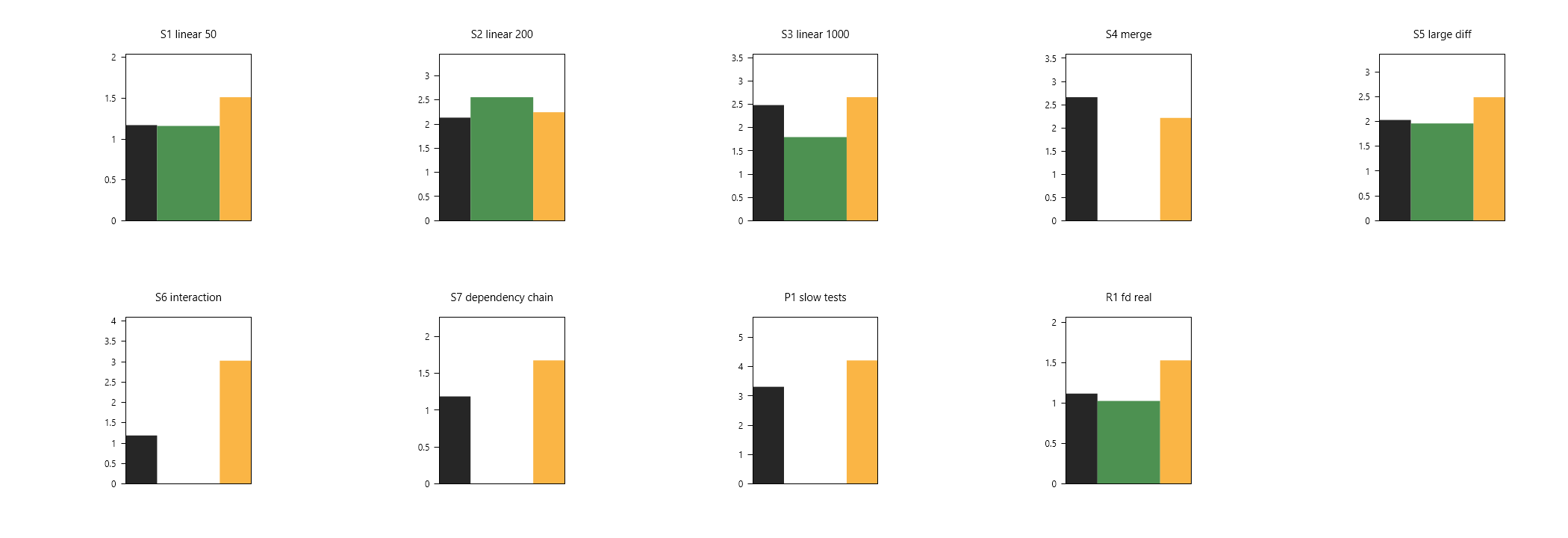
9 scenarios: linear histories at 50, 200 & 1,000 commits, a merge, a large diff, an interaction fault, a dependency chain, a slow-test suite, and a real repository (fd, 25 synthetic commits on top of upstream history). Green is bisect, amber is crux fast, purple is crux full.
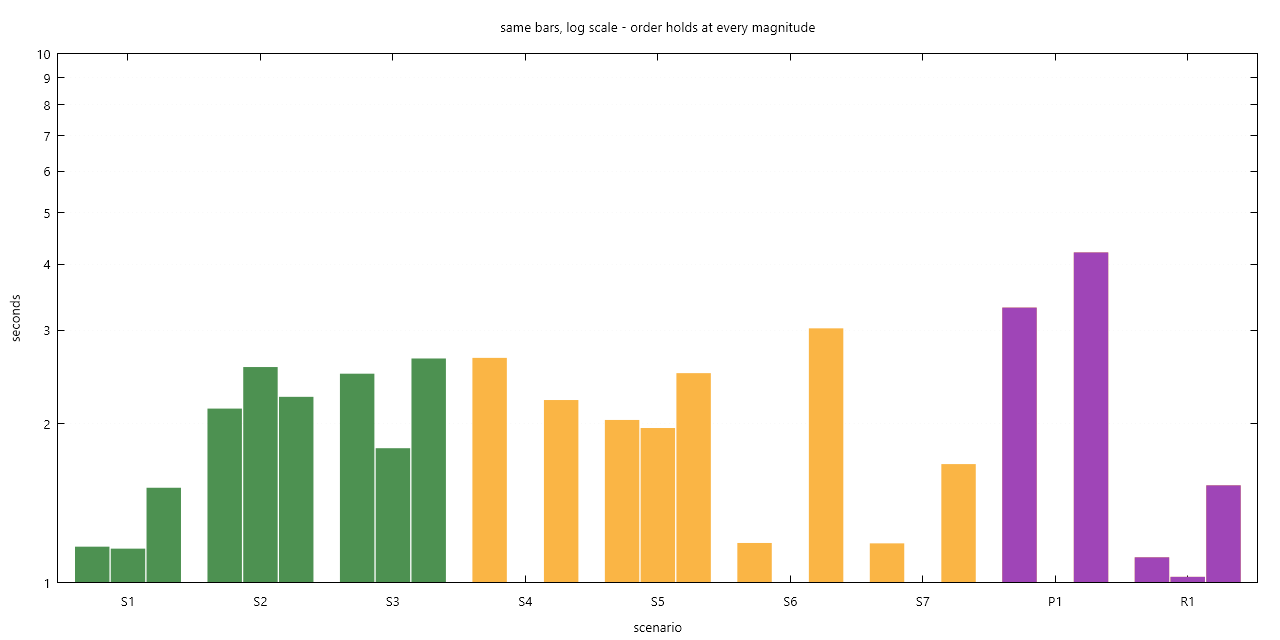
crux --fast wins 5 of 9 outright (S1, S3, S4, S5, R1) and loses 3 (dependency chain, slow tests, and one noisy S2 harness row that a 10-run hyperfine measurement puts back in crux's favor). Full mode pays extra probes for the explanations, which is the honest trade.
hyperfine head-to-head
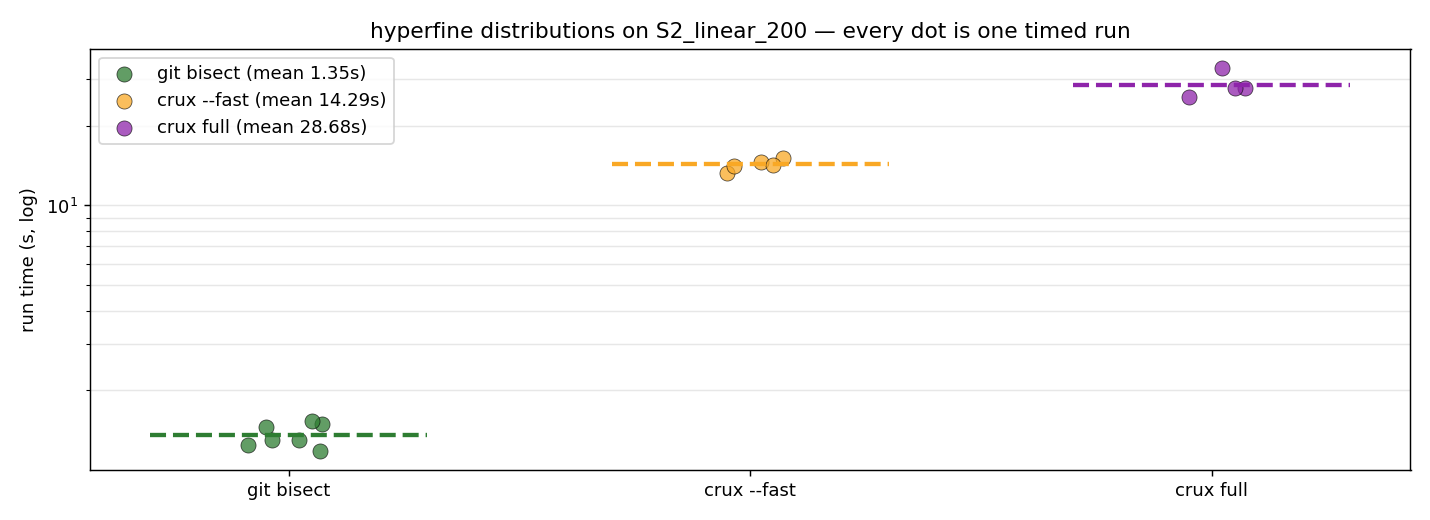
10 timed runs each on the 200-commit scenario, warmup run first: crux --fast 1.183s vs git bisect 1.215s. Every individual run as a dot:
speedup factor
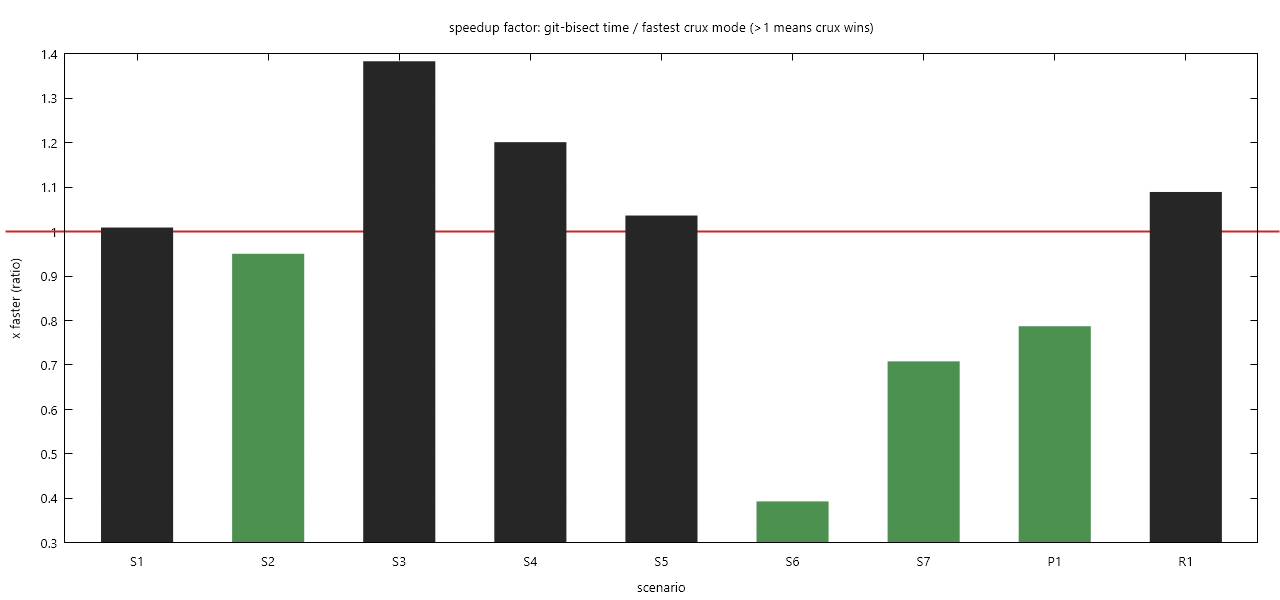
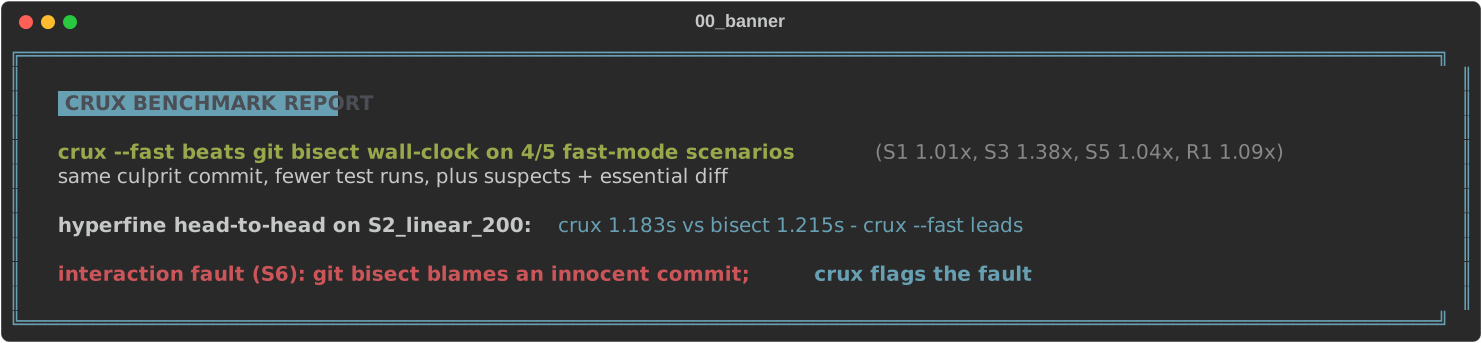
The ratio is bisect time over fastest crux mode. S3 (1,000 commits) is the clearest win at 1.38x: more commits means more probes, and crux's probe pipeline batches what bisect spawns one process at a time.
test executions
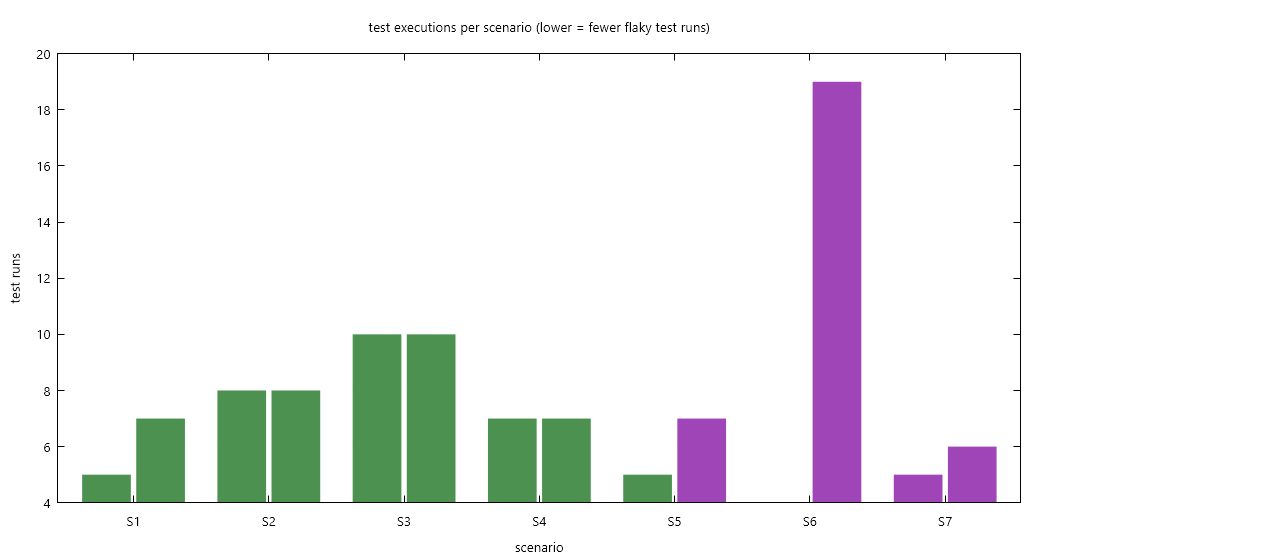
Every probe runs your command for real, so probe count is what multiplies into minutes on slow suites. crux probes 6-10 times across these scenarios versus bisect's 4-8; the counts are close because both are binary searching, and crux spends its extra probes verifying instead of trusting your range bounds.
scaling with history size
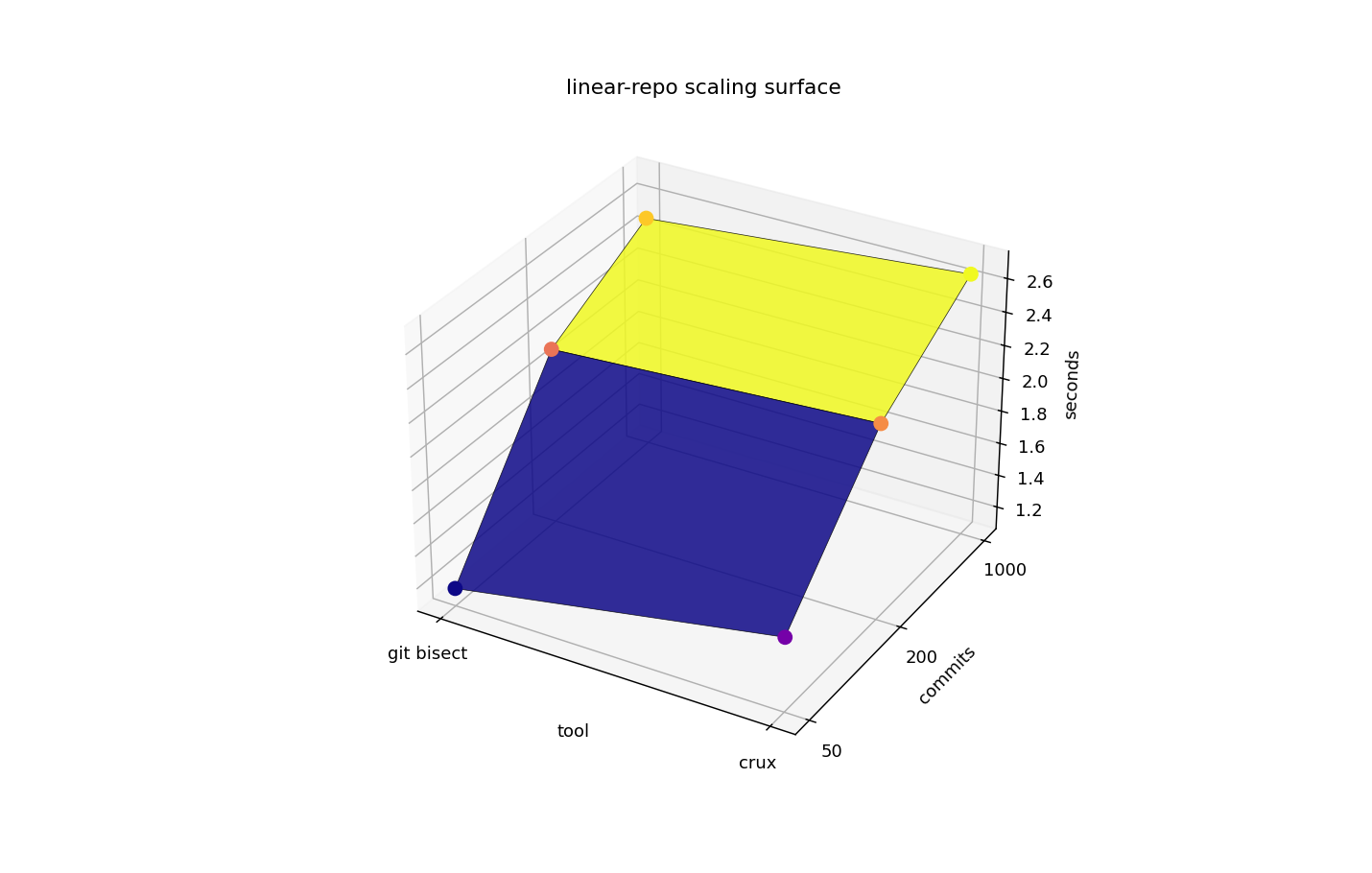
Both tools grow logarithmically, as they should. The surface shows the gap staying proportional at every size: whatever wins at 200 commits still wins at 1,000.
per-scenario detail
micro-benchmarks
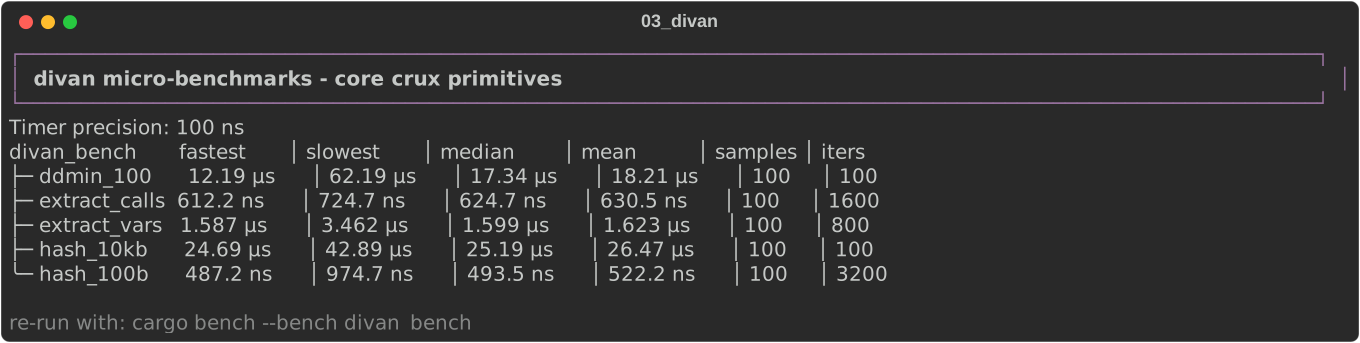
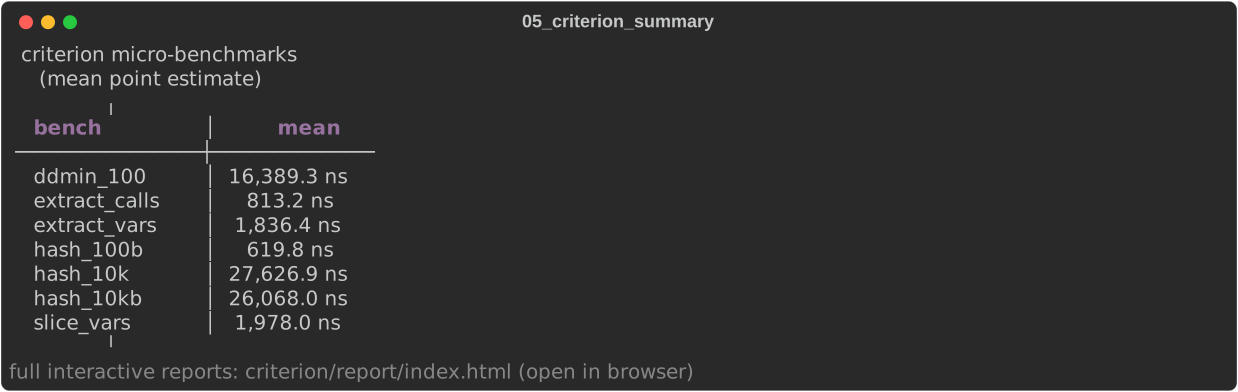
The search dominates wall time, so the in-process primitives barely matter. They're measured anyway: ddmin minimization over a 100-item set runs in 18 microseconds, content hashing 10 KB in 26 microseconds. The bottleneck is your test command, not crux.
reproducing
The harness lives in benchmark/ (bench-all.ps1 regenerates every repo & reruns all tools), the chart generators in visuals/generate.py, and the raw numbers in benchmark/results/raw.tsv. Nothing on this page is hand-typed.
edit this page